Guides / Done for you
AI receptionist complaint calls: a staff review plan
By Next Gen Calls · Published
Quick summary
We build, connect, launch and tune your AI receptionist around an agreed complaint-handling plan. Decide what the agent should capture, who can make the decision and what the caller hears if that person cannot answer. A requested refund, repair or deadline stays a request until the authorized person confirms the outcome.
- 01 →
Listen to the reported problem
Use what the caller actually says and clarify only the missing details needed for the next step.
- 02 →
Separate the request from the decision
Keep the desired fix and deadline distinct from anything staff have approved.
- 03
Give the review a clear owner
Follow the agreed handoff or message path and verify the actual call outcome.
Illustrative workflow. We confirm the connected actions and permissions for your setup before launch.
Let the caller explain what went wrong
A complaint call is often about an existing piece of work, an order or a conversation with your team. Start with a natural greeting such as “Thanks for calling the alterations shop. How can I help?” Then let the caller finish.
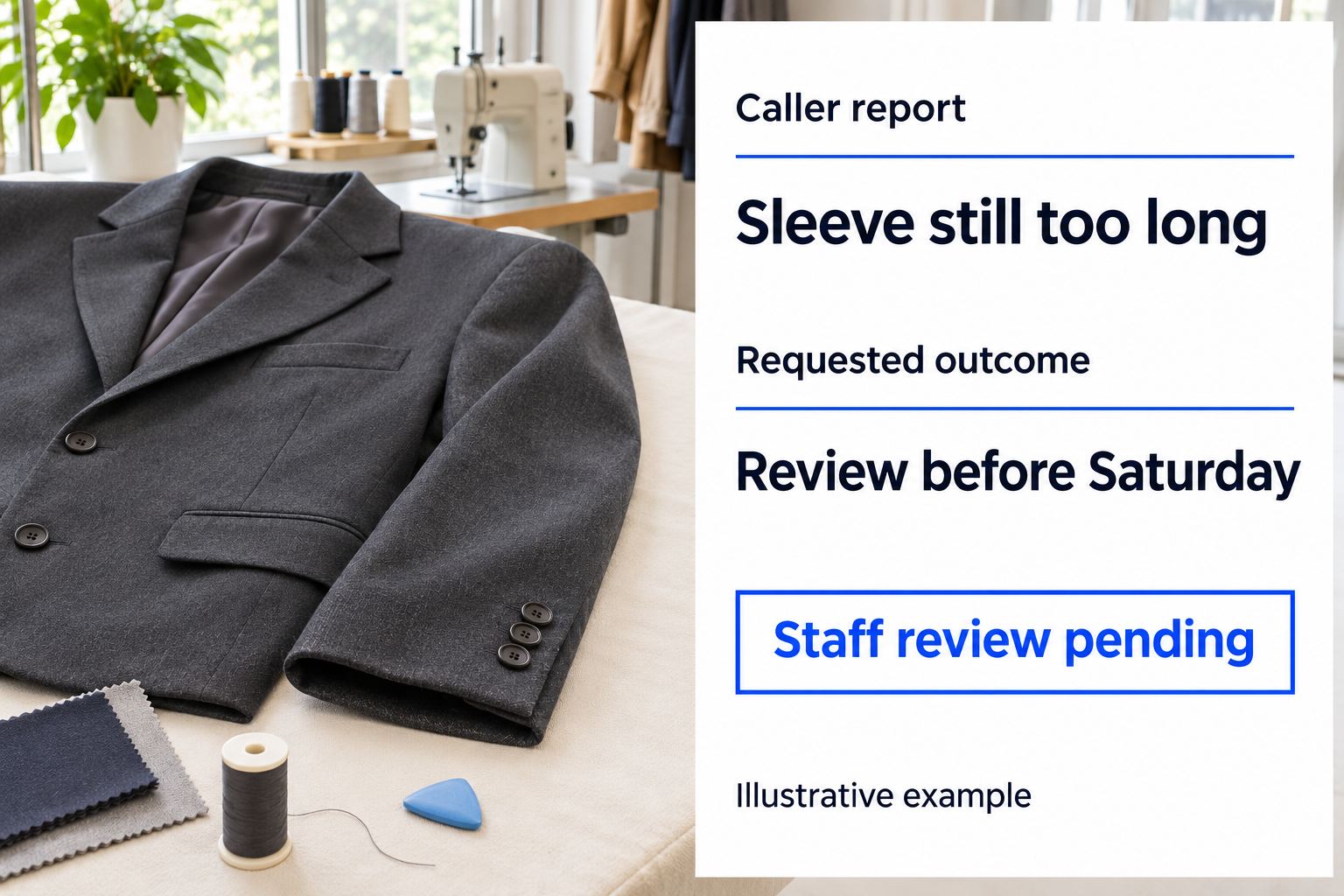
Use the information they have already given. If they say a jacket still does not fit and they need it for Saturday, the next question should help staff identify or handle that request. It should not send them through a new-sales interview.
Agree which situations go directly to a person. A caller asking for the manager should have a clear staff route without first completing a long list of questions. The human-handoff guide covers the receiving contacts, private briefing and backup plan. This guide focuses on what the complaint record needs to preserve.
Separate the reported problem, requested fix and decision
Three statements can sound similar while meaning different things:
- The caller's account: “The sleeve is still too long.” This records what the caller reports, not a completed inspection of the jacket.
- The requested outcome: “I'd like it corrected before Saturday.” This is the result the caller wants.
- The approved outcome: A staff member has reviewed the request and confirmed what the shop will do. That decision needs its own evidence.
The FTC's complaint-letter guidance separates the problem from the resolution the customer wants. That distinction is useful for a phone brief too: staff need both, without having the requested remedy presented as something already agreed.
A requested refund is not a refund issued. A request to redo the work is not a confirmed visit. An explanation of your general policy is not a decision about that customer's exception.
Give us the business answers your team approves, including which policy questions the receptionist may answer and which individual decisions stay with staff. Keep prices, exceptions and promises within that agreed scope.
Agree a short complaint brief your team can use
Choose the information that helps the receiving person act:
- What the caller reports: The problem in plain words, with relevant order, visit or service details actually provided.
- What they want now: A review, explanation, repair, refund or another requested next step.
- What timing matters to them: A stated need or deadline, kept separate from your team's commitment.
- What contact has already happened: The caller's account of earlier calls or promises, with uncertainties left clear.
- Who reviews it next: The agreed person or team, the real call outcome and any decision still open.
Ask for one missing detail at a time. Collect only the information your agreed process needs to identify the request or reach the caller. If a detail cannot be established, leave it uncertain rather than filling the gap with a plausible answer.
Do not assume that a summary creates a formal case number, assigns a repair, changes an invoice or starts a response-time clock. Agree and verify any connected action separately. The useful result for this plan is a clear request that the responsible staff member can review.
Follow an alterations complaint through the call
This is a fictional example. The shop's agreed complaint route goes to the tailor; if that person cannot answer, an accepted message is taken for review. It does not authorize the receptionist to promise a repair date.
Receptionist: Thanks for calling the alterations shop. How can I help?
Caller: I picked up my jacket yesterday. The sleeves are still too long, and I need it for Saturday.
Receptionist: What name was the order under?
Caller: Casey.
The receptionist can now follow the agreed staff route with the useful context. It does not need to ask Casey to repeat why they are calling.
If the tailor cannot answer and Casey agrees to leave the request, confirm the needed contact details and record the actual message outcome. A closing after that step could be:
Receptionist: I've taken your request for the tailor to review. They still need to confirm whether it can be ready Saturday.
The call summary should leave staff with distinct information:
- Casey reports that the jacket sleeves are still too long after collection.
- Casey wants the fit reviewed and needs the jacket for Saturday.
- The tailor did not connect during the call; the request was taken for review.
- The timing and any remedy remain for the tailor to confirm.
That record gives the tailor a useful starting point. It does not decide whether the work was faulty, agree a refund or turn Saturday into a confirmed completion date.
Plan who handles the next conversation
Name the decision owner and the coverage they actually provide. Smart Receptionist Agent™ supports warm transfers with a short private briefing, configured backup and voicemail fallback, missed-transfer notifications and post-call summaries. We build the agreed route around your staff and their availability.
If you want staff to join live calls, supervisor listening and takeover are available within the agreed setup. The live-supervision guide explains how to plan that role. A monitoring option does not establish that somebody watches every complaint call.
For an unanswered route, decide who checks the open request and what the receptionist may truthfully say about the response. Avoid a specific callback promise that the receiving team has not approved. Check any agreed notification delivery separately from the fact that the call was answered.
Test the boundaries before approving the plan
Rehearse calls that expose different decisions:
- A customer reports a problem and wants a repair. Check that staff receive the reported issue and requested outcome separately.
- The caller asks for a refund or price adjustment. Check that capturing the request does not become an approval or a claimed payment action.
- The caller changes a deadline or says they called before. Check the final request, including which earlier statements are only the caller's account.
- The caller wants a person and that person cannot answer. Observe the real handoff or backup outcome and the wording the caller hears.
Review the spoken ending, receiving brief and summary together. Record any mismatch and who owns the correction. We use those examples to tune the complaint plan so your team can take the next conversation with the right facts and an honest account of what remains undecided.
Common questions
Can an AI receptionist take a customer complaint?
Smart Receptionist Agent™ can capture the caller's request, use approved business information, warm-transfer to your team and provide an AI call summary. We agree which complaint calls need a person and what information helps that person respond. Capturing the complaint does not mean the agent has investigated or resolved it.
Can it approve a refund or promise to redo the work?
Do not build that promise into a complaint example unless the specific action and authority have been verified for your setup. The plan here captures what the caller wants and gives the decision to staff. A refund request, requested repair or preferred deadline is not an approved remedy, completed payment action or confirmed appointment.
What if the customer says they have already called?
Keep that part of the caller's account with the new information. Ask for only the missing details needed to identify the request or reach the right team. Do not treat a reported earlier promise as verified, or make the caller repeat the entire story through an unrelated new-customer intake.
What if the caller asks for the manager straight away?
Give that request the staff route agreed for your business. Ask only for information needed to make a useful handoff, rather than requiring a full complaint form before trying a person. Agree the recipient, coverage and backup before launch, and test the actual connection.
What happens when nobody can take the complaint call?
Use the configured backup or voicemail plan, or the message-capture path agreed for that request. Tell the caller what actually happened and what still needs staff review. Include a response time only when your team has approved it and can support it; an unanswered transfer is not a conversation with the manager.
What should we check when testing complaint calls?
Try a reported problem, a requested refund, a changed deadline, a repeat-contact claim and a direct request for a person. Include staff being unavailable. Check that the summary separates the caller's account, desired fix, actual action and unresolved decision, with a clear receiving owner.