Guides / Done for you
How to supervise your AI receptionist during live calls
By Next Gen Calls · Published
Quick summary
We build, connect, launch and tune your AI receptionist for you. Next Gen Calls supports supervisor listen and takeover, so an authorised person can hear a live call and step in to speak with the caller. Agree who covers that role, when they should intervene and who owns the next step after the conversation.
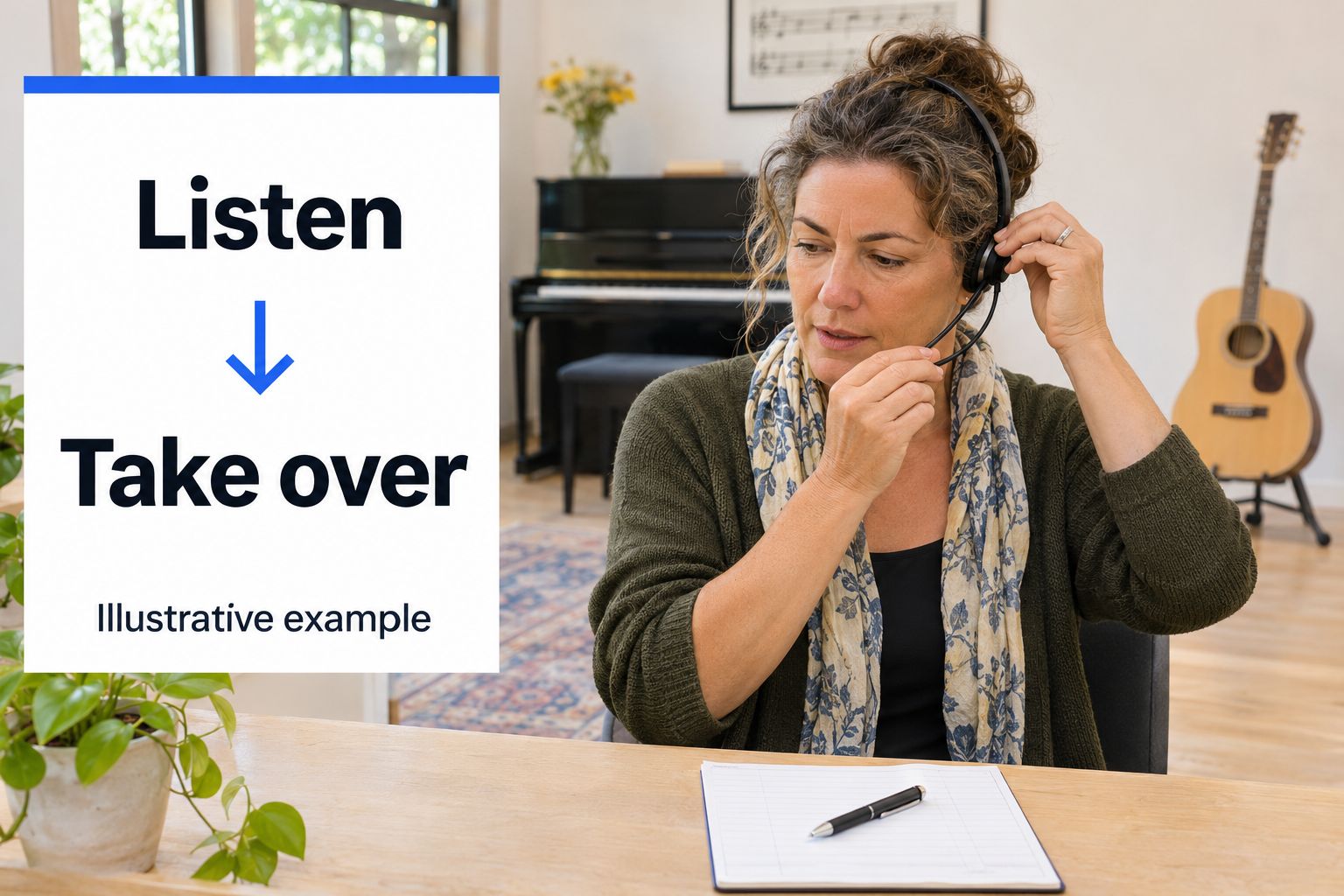
- 01 →
Choose the supervisor
Confirm access, coverage and the calls worth checking.
- 02 →
Listen and step in when useful
Use the agreed takeover path when a caller needs that person's help.
- 03
Own the result
Record staff decisions and review the actual next step with us.
Illustrative workflow. We confirm the connected actions and permissions for your setup before launch.
Give someone a clear job during supervised calls
An owner may want to hear how a new receptionist handles an awkward question before leaving it to run the agreed call flow. Live supervision gives an authorised person a way to listen and, when useful, step into that conversation.
Make that person's job specific. They might review a newly approved service answer, listen for repeated questions or help a caller who needs a staff decision. Name the person covering that work and the times they can actually be available.
Bring those decisions to us. We build and tune the receptionist around your approved business answers and human-help plan. Your designated supervisor supplies the judgement and availability needed for the calls they monitor.
For a small music studio, that might mean the owner listening to selected calls after changing the lesson schedule. The receptionist can handle approved questions and the supported booking path. Requests for an exception to a studio policy still need the right person.
How listening and takeover work
Supervisor listen is for hearing a live call. Takeover is the step that lets an authorised person speak with the caller. Confirm access and the listening and microphone setup with us before using those controls on customer calls.
Check the whole transition: the supervisor can hear the conversation, the caller can hear the person after takeover, and the AI yields appropriately. An open monitor, a clicked button and a completed conversation are different things. Test the actual audio path rather than relying only on an on-screen status.
Agree how the staff-led conversation should finish and what happens if the supervisor loses their connection. Keep the ordinary human-help route ready for calls no supervisor is watching.
Choose when the supervisor should step in
Listen for a need that the supervisor can resolve. Some useful intervention rules are:
- The caller asks for a person. Respect that request and use the available human route.
- A decision is outside the receptionist's approved scope. A policy exception or disputed charge may require staff judgement rather than another explanation of the standard rule.
- The conversation is going in circles. The caller has corrected a detail or answered a question, but the call is not progressing.
- An important business answer is wrong. Staff can give the correct approved information and flag the source or call-handling rule for review with us.
A pause while the caller thinks does not by itself require an interruption. Let people finish speaking and give the receptionist room to complete the supported task. The aim is a useful conversation, with the right person available when their help is needed.
If the supervisor cannot make the requested decision, they should identify who can and own the follow-up. Taking over does not give someone authority to promise a refund, approve a policy exception or confirm an appointment outside the business's rules.
Join naturally and use what the caller has already said
Here is a fictional training example. A music-studio owner is listening to a selected call about moving a lesson. The usual opening is simple:
Receptionist: How can I help?
Caller: I need to move my lesson.
Later in that conversation, after discussing the available options, the caller asks for staff help. The owner uses the tested takeover path before speaking:
Caller: I can't make those times. Could I speak to someone at the studio?
Owner: Hi, I'm Alex from the studio. Which day works for you?
The owner introduces themselves and asks for one useful detail. They use the context they heard rather than making the caller restart the whole explanation. If the caller has already named a preferred day, the next question should build on that instead.
Keep the conversation natural: let the caller finish, answer the actual question and ask one missing detail at a time. An introduction from a real staff member is enough; there is no need for a long announcement about the system.
The outcome still needs to be accurate. If Alex must check with a teacher before offering another time, the lesson change is awaiting review. It should not be described as confirmed until the business has actually confirmed it.
Keep coverage useful when nobody is listening
Write down which calls the supervisor will check and when. Selected calls can help after a change to a service answer, booking rule or receiving team. You can then review what happened and bring concrete examples to us for tuning.
For the rest of the day, the receptionist still needs its ordinary route to staff. Next Gen Calls supports warm transfers with a private whisper briefing, routing by hours and holidays, and backup routing. Agree the receiving contacts and what the caller can be told if nobody answers.
Live takeover is separate from that transfer process. Someone listening through supervision may step in; a warm transfer tries the agreed receiving person. A private transfer briefing is also different from privately coaching the AI while it speaks. Confirm the capability you need rather than treating those labels as interchangeable.
Our human-transfer guide covers receiving staff, briefing and backup. Keep both paths tied to real availability so a request for a person leads to a clear next step.
Record what the supervisor decided
After a staff-led conversation, have that person record the decision, any promise to the caller, the next owner and the actual appointment or request status in your team's agreed place.
Review the AI call summary alongside those staff notes and any connected booking or follow-up record. Confirm which parts of the conversation your setup captures; do not assume the whole staff-led portion will appear automatically in an AI summary or recording.
Keep a useful distinction between three questions:
- What did the caller need?
- What did the receptionist and supervisor actually do?
- What remains for a named person to finish?
That gives your team a practical way to close the loop. The call-summary follow-up guide explains how to assign the next step without turning a captured request into a claimed result.
Rehearse the intervention before customer calls
Check supervisor access, hearing and microphone permissions in the agreed setup. Rehearse listening without speaking, taking over, a caller correcting a detail, a request outside scope and a supervisor who is unavailable or loses connection.
During those checks, listen for whether the caller can hear the right person and whether repeated intake or overlapping speech gets in the way. Then check how the conversation ends, what staff record and who receives any unfinished request.
Use the launch checklist for the wider booking, transfer and summary checks. We tune the agreed receptionist with you; your team keeps the business facts, intervention decisions and follow-up ownership current.
A friendly note: approve your monitoring, recording and privacy arrangements with your team before launch.
Common questions
Can I listen to my AI receptionist's live calls?
Yes. Next Gen Calls supports supervisor listen. Confirm which authorised people can use it in your workspace and test the listening setup with us. Choose useful calls to review rather than assuming someone will watch every call.
Can a person take over an AI call?
Yes. Supervisor takeover lets an authorised person step into the live call to speak with the caller. Check access, microphone permissions, audio and what the caller hears before relying on it. Do not treat opening the monitor as a completed takeover.
Is takeover the same as a warm transfer?
No. Supervisor takeover is a person joining through the live supervision path. A warm transfer routes the caller to a receiving person and can give that recipient a private whisper briefing. Agree which route fits your team and test its own unavailable-person path.
Should a supervisor listen to every call?
Choose coverage that your team can actually provide. Selected calls can help review a new business answer, an exception or a change to the call flow. Keep a normal human-transfer or follow-up route for calls that need help when no supervisor is watching.
Does an AI call summary replace the supervisor's notes?
No. The supervisor should record decisions and commitments they make in your team's agreed place. Check which parts of a staff-led conversation appear in the summary and other records for your setup, then compare them with the actual booking or follow-up result. Do not assume every staff conversation is captured automatically.
Does listening include privately coaching the AI during the call?
Supervisor listen and takeover are the capabilities described here. Do not assume that listening includes a separate live coaching channel. A private whisper briefing for the recipient of a warm transfer is a different part of call handling.