Guides / Done for you
AI receptionist holiday hours: a closure plan
By Next Gen Calls · Published
Quick summary
We build, connect, launch and tune your AI receptionist, including the holiday routing agreed for your business. Before a closure, confirm what callers should hear, who is available for transfers and what happens to requests until the team returns. Your office can be closed while the receptionist continues taking the requests you have agreed it should handle.
- 01 →
Agree the closure details
Use exact dates, local times and a reopening plan.
- 02 →
Match the call route
Check who is available and what needs a message.
- 03
Check the return to normal
Review requests and remove temporary wording.
Illustrative workflow. We confirm the connected actions and permissions for your setup before launch.
Keep callers informed while your team takes a break
A holiday closure can change more than the sign on your door. The person who usually takes transfers may be away, a calendar may still offer appointments and a caller may need to know whether to visit or leave a request.
Give us one clear closure brief. We use it to configure and check the agreed receptionist behavior with you. You keep the decisions about opening, staff coverage and the promises your business can make.
The useful outcome is a caller who knows what can happen now and what will wait. Answering a call during a closure does not mean the office, workshop or every staff member is working.
Send one closure brief, with exact dates
Use this worksheet for each location or team whose arrangements differ:
- Closure period: The exact start and end dates, including any early finish or reduced-hours day.
- Local time: The location’s time zone, closing time and planned reopening time. Avoid a note that just says “closed Friday.”
- Caller answer: What the receptionist should say about visits, services and when the team returns.
- Available people: Who has agreed to take which calls, during what hours, and the approved backup if they do not answer.
- Booking scope: Which appointment types and dates may be offered, and which requests need staff review.
- Request destination: Who receives the collected details and who checks them during the break, if anyone.
- Follow-up wording: What the caller can accurately be told about the next step. Keep a preferred callback time separate from a response promise.
- Reopening owner: Who confirms that normal answers and routing are correct when the closure ends.
If a plan is not settled, tell us which decision is still open. A missing reopening time or unconfirmed staff rota should stay visible rather than turn into a confident answer to callers.
Match the message, transfers and booking path
These are three separate questions to check together:
What does the caller hear? The answer should distinguish the physical office’s closure from the help still available by phone. It should also make the next step clear for a routine request.
Who can receive a transfer? Next Gen Calls supports routing by business hours and holidays, warm transfers with a private whisper briefing, a backup group and voicemail fallback. Confirm the actual holiday coverage. A person’s normal working hours do not prove they are available during leave.
What can be booked? Check the connected booking path and the appointment types you have agreed. Closing a staff-transfer route does not establish that a calendar has removed its slots. A request for a visit during the closure may need to be collected for review instead of confirmed.
Our call-transfer guide explains the live handoff and backup plan. Use it alongside the closure brief, particularly if the usual receiving person will be away.
A natural example: the repair shop is closed
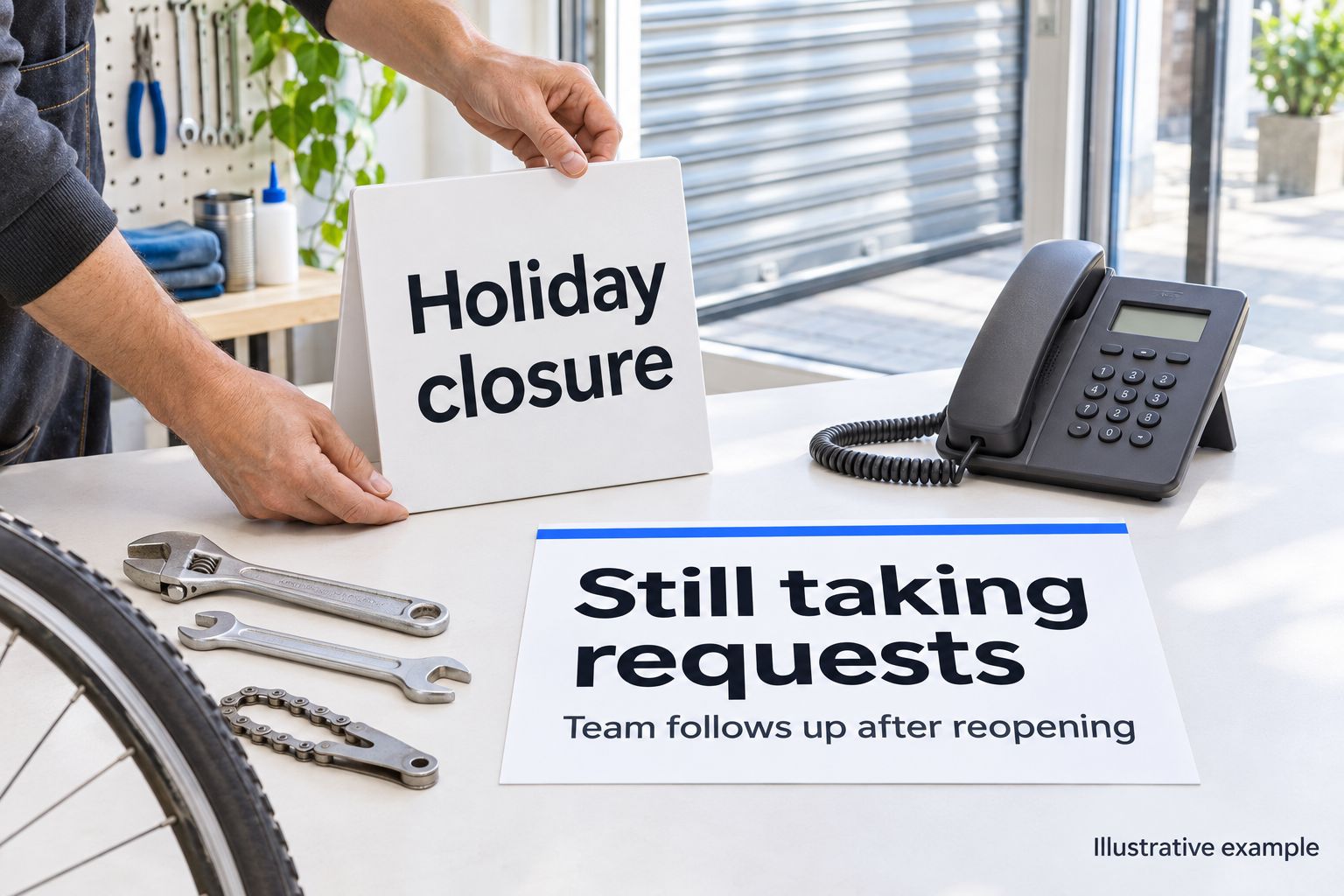
This is a fictional training example. A bicycle-repair shop closes for a long weekend and plans to reopen Monday at 9 a.m. Its agreed holiday arrangement is to collect routine requests for staff review after reopening.
Assistant: How can I help?
Caller: Can I bring my bike in this afternoon?
Assistant: The shop is closed for the holiday and reopens Monday at 9. Would you like to leave a repair request for the team?
If the caller agrees, ask for the missing details one at a time. Use what they have already said. The closing should describe the real outcome: the request has been taken for the team, rather than a repair slot or same-day callback being promised.
If the same business has arranged a person to cover certain calls, that is a different route to test. Do not turn a routine inquiry into an urgent transfer simply because the office is closed.
Check the edges of the closure
We agree and test the relevant scenarios before relying on the holiday plan. A useful check covers:
- The last normal working period: Regular answers and transfers still match the people available.
- An early finish: The caller hears the intended next step after the team leaves, rather than the usual closing time.
- A full closed day: The receptionist explains the closure, handles the permitted requests and uses the agreed human route only when appropriate.
- An unavailable covering person: The backup or message path works, and the caller is told what actually happened.
- The first reopening period: Temporary wording has ended and ordinary staff coverage is correct.
For each scenario, compare the caller’s closing message with the actual transfer, collected request and any booking result. A correct greeting alone is not enough to confirm the whole arrangement.
Keep public hours consistent too
Check the hours on your website, door notice and other places customers use before calling or visiting. Google provides special-hours guidance for Business Profiles for temporary changes while retaining regular hours.
Those public updates need their own owner. Updating a Google listing is separate from confirming the receptionist’s message, staff routing and connected booking behavior. Give your team one approved set of closure details to use across them.
Make reopening part of the plan
Before leaving, decide who will check ordinary call handling when the team returns. Remove expired closure wording, confirm who is taking transfers and check the booking path before telling customers that normal service has resumed.
Then review the requests collected during the break. AI post-call summaries and the agreed email or SMS alerts help staff see what callers needed. Receiving a report and completing the follow-up are separate steps; use the call-summary follow-up guide to assign the remaining work.
If the break is extended or someone’s availability changes, send the revised details rather than leave the original plan in place. We tune the agreed receptionist setup around those approved changes. For ordinary evenings and weekends, the after-hours guide covers the caller conversation in more detail.
Common questions
Can the AI receptionist answer when our office is closed?
Yes. Smart Receptionist Agent™ can answer calls and take agreed requests while your office is closed. We confirm the approved answers, booking scope, transfer coverage and staff follow-up for the closure.
Does changing the holiday greeting change call routing too?
Treat the caller’s message and the routing plan as separate things to verify. A correct closure announcement does not establish that every staff destination, backup or connected calendar is following the intended holiday plan.
Can calls still reach someone covering the holiday?
We can configure an agreed warm-transfer route, with a private briefing and backup group or voicemail fallback. Confirm the actual people, dates and availability before promising that a person will answer.
Will marking the office closed prevent all appointment bookings?
Do not assume that a phone-routing change also blocks your calendar. We confirm the supported booking path separately and check which appointments may be offered during and after the closure. A preferred time remains a request until the booking is confirmed.
What should we send before a holiday change?
Send the closure dates, time zone, reopening time, approved caller wording, available transfer contacts, permitted booking options and the person reviewing requests. Include any early finish or reduced-hours day.
What needs checking when we reopen?
Check that ordinary caller wording and staff routing are correct, review requests collected during the closure and confirm the booking path. Name someone to own that reopening check before the team leaves.