Guides / Done for you
Law firm intake call checklist before a consultation
By Next Gen Calls · Published
Quick summary
Next Gen Calls builds, connects, launches and tunes your law firm's AI receptionist for you. A useful first intake call captures the contact details and short description your firm approves, flags missing information and gives staff a clear next action. Use the checklist below to agree what belongs in that call and when your intake team should take over.
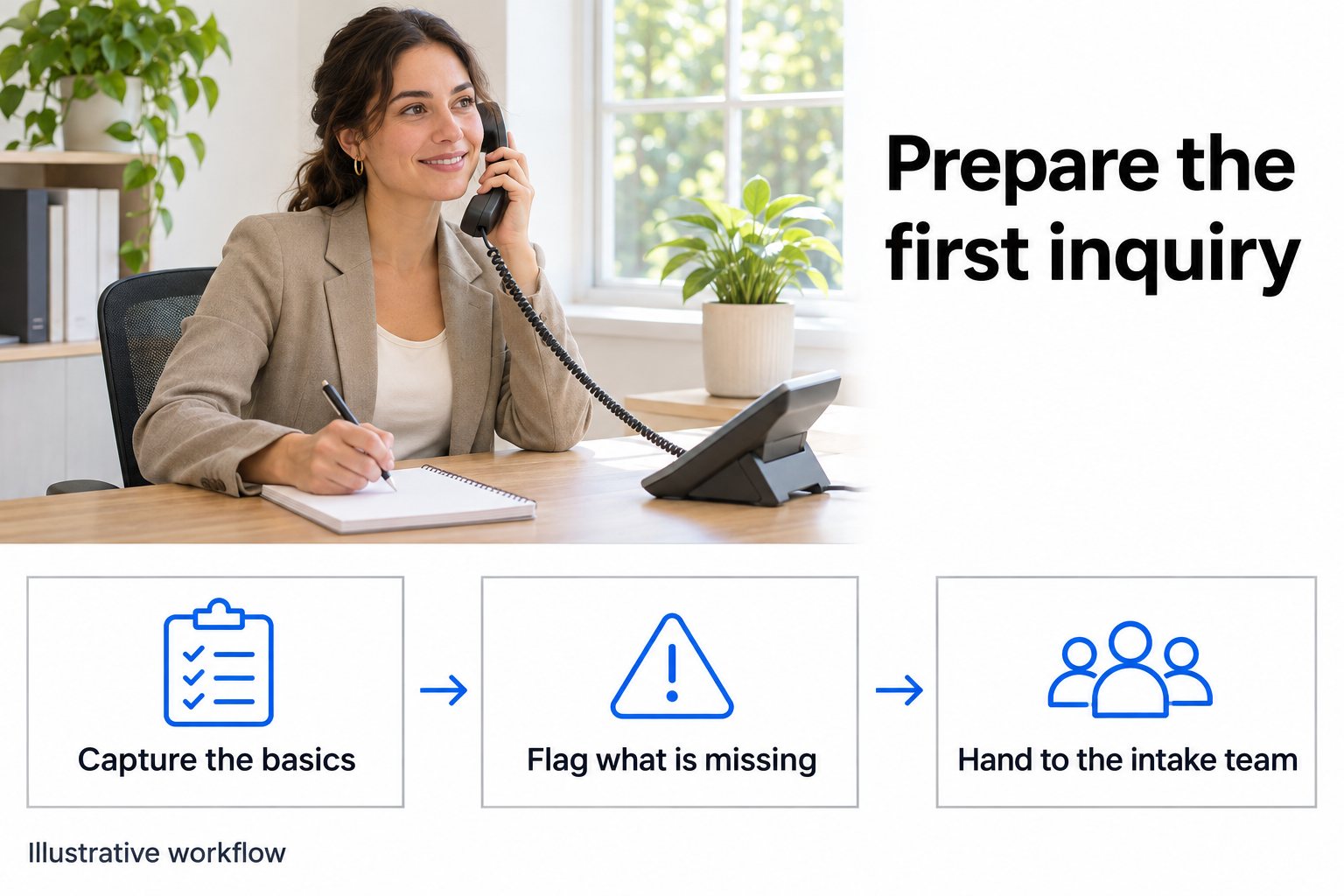
- 01 →
Capture the approved basics
Confirm how to contact the caller and ask the short questions your firm has approved.
- 02 →
Keep uncertainty visible
Preserve missing names, unclear dates and corrected details for the person reviewing the inquiry.
- 03
Give the next step an owner
Use your staff-review, warm-transfer or approved consultation-booking path.
Illustrative workflow. We confirm the connected actions and permissions for your setup before launch.
Use this first-call checklist with your intake team
The first call should leave the person reviewing it able to decide what to do next. Work through these questions with the attorney or staff member who owns intake, then give us the approved wording.
- Who is calling? Confirm the caller's name and whether this is a new inquiry, an existing matter or another office request.
- How should staff respond? Confirm the callback number and any contact preference your firm needs. Ask the caller to clarify a correction before the conversation ends.
- What is the short request? Ask for the broad type of help and the relevant location. Keep the description within the first-call scope your firm approves.
- Which names does staff need? Your firm decides which people or organizations to identify for its review and when to ask. Confirm spelling when needed.
- Has the caller mentioned a date? Capture the date and what the caller says it relates to. Mark uncertainty so staff can check it.
- What is still missing? Make an incomplete name, unclear location or unconfirmed date visible in the handoff.
- Who takes the next action? Choose the approved staff route or booking path, and explain what the caller can expect from that step.
The Louisiana State Bar Association's practice guide uses an initial consultation form to help staff gather information before the lawyer's review. Use your firm's own questions and review process for its practice and location. LSBA practice guide
Agree where the short inquiry should pause
A caller may begin telling the full story before you have confirmed a callback number. Plan a friendly way to keep the conversation within the information your firm wants at this stage.
For example, your firm might approve wording such as “I can take a brief description for our intake team. They will let you know what further information they need.” Have the firm choose the wording for sensitive questions or a request for advice.
The ABA's commentary on Model Rule 1.18 discusses limiting the initial consultation to information reasonably needed when considering a new matter. That is a reason to have your attorneys approve the first-call scope. ABA commentary on prospective clients
When the caller mentions a hearing or another date they are worried about, preserve what they said and use the firm's escalation instructions. Your attorneys decide what the date means and what response is appropriate.
Use a clear response when information is missing
Write the missing-detail prompts before launch. That lets staff judge the result against something specific.
- Unclear name spelling. Ask the caller to spell it, then confirm the version staff will receive.
- Unknown other party. Record that the caller could not provide the name and send the inquiry for the review your firm requires.
- Vague date. If the caller says “next week,” ask for the date they mean. If they cannot confirm it, retain that uncertainty.
- Changed callback number. Confirm the final number and check that the summary makes the correction clear.
- Unclear reason for calling. Ask one short clarification, then use the staff route if the request still needs interpretation.
A record search in Clio can support an approved caller workflow. Keep the result of that lookup separate from the firm's conflicts decision. We agree the permitted fields and connected actions for your build before launch. Clio intake connection
Give the reviewer a note they can use
Use these headings to agree what a useful handoff should contain. They are a worksheet for your team to adapt.
- Caller and contact preference
- New inquiry or existing client
- Short request and relevant location
- Names collected and spelling confirmed
- Caller-reported date and reason
- Missing or uncertain details
- Next action and responsible team
- What the caller was told
Here is an invented intake example. A new caller asks about an employment issue and says they have a letter requiring a reply next week. They do not have the letter with them and cannot confirm the employer's full legal name. Staff are in a consultation.
The useful note would preserve those gaps. It could say “New employment inquiry. Caller reports a reply date next week but has not confirmed the date. Employer name incomplete. Callback details confirmed. Intake team review requested under the firm's routing instructions. Caller told the team needs to review the inquiry before offering a consultation.”
That note gives the receiving person two details to clarify and a next step. It also lets staff check whether what the caller heard matches the outcome recorded after the call.
Choose the next step before offering a time
For each approved type of inquiry, decide which of these paths applies.
Staff review comes first. Capture the request and route it to the named intake role. A preferred callback time is information for that team to review. Tell the caller the step your firm has approved.
A person should join the call. Use a warm transfer. The recipient gets a private whisper briefing before joining. Agree the backup group and voicemail fallback, including what the caller should hear when staff are unavailable.
The firm permits a consultation booking. Agree the appointment type, calendar and details required before offering it. Check the actual booking result before describing the appointment as confirmed.
Next Gen Calls builds those paths around your instructions. Your firm retains conflicts decisions, legal advice and the decision to accept a matter.
Approve the checklist with test calls
Ask the person who normally receives intake notes to review the launch tests. Include a complete inquiry, missing party details, a corrected callback number, an uncertain date and a caller asking for advice. Test the fallback when a transfer reaches nobody.
For each call, compare the caller's words, the summary and any approved connected action. Ask whether the next staff member can see what needs checking and who should respond. If a detail is wrong, correct the build with us and repeat that case before approving it.
Bring your current intake form, practice-area descriptions, consultation rules and staff contacts. We build, connect, launch and tune the Smart Receptionist Agent™ around the version your team approves. Your firm's attorney should review the intake, privacy and recording wording for its own obligations.
Common questions
What should a law firm ask on the first intake call?
Start with the caller's name, whether they are a new inquirer or current client, a suitable callback method and a short reason for calling. Add the location, relevant names and caller-reported dates that your firm wants staff to review. Your attorneys approve the questions and their order.
Should the AI receptionist run the conflict check?
Your firm keeps conflict decisions. The receptionist can ask the questions you approve for gathering the information staff need. A customer-record lookup does not establish that a conflict check is complete or that the firm can accept the matter.
What if the caller does not know a name or date?
Record that the detail is missing or uncertain and follow your staff-review path. Preserve the caller's own wording. Staff can clarify the information through the firm's approved process before taking the next decision.
Can the receptionist book the consultation?
Where your firm permits booking at that stage, we can scope and test the connected appointment action. If staff must review an inquiry first, collect the request and explain that next step. A preferred appointment time becomes confirmed only when the approved booking succeeds.
What should staff receive after an intake call?
An AI call summary should help them see who called, how to respond, the short request, information still needing confirmation and the next step discussed. Agree which details belong in the summary and which connected fields are included in your build.